_1.png?width=800&auto=format)
Building the Future of First Nations Nursing and Midwifery Leadership
A pilot Queensland initiative is creating leadership pathways designed specifically for First Nations nurses and midwives.
The Tjurtu First Nations Nursing and Midwifery Leadership Program was introduced as part of a broader effort to support and empower First Nations leadership within nursing and midwifery. Professor Roianne West, a Kalkadunga and Djkunde woman, and lead of the Tjurtu Program, shares insights into the program’s development, outcomes and future direction.
Can you tell us about the Tjurtu First Nations Nursing and Midwifery Leadership Program?
The Tjurtu First Nations Nursing and Midwifery Leadership Program is a culturally grounded, sovereign leadership initiative designed specifically for First Nations nurses and midwives. Developed with Queensland Health and First Nations Nursing and Midwifery Consulting (FNNMC), the program responds directly to workforce calls for culturally safe leadership pathways.
Tjurtu is grounded in Kalkadunga cultural governance, the Five Cultural Anchors, relational accountability and nation-building leadership. It was intentionally designed to meet both AQF Level 8 standards and the expectations of First Nations health, nursing and midwifery leaders and Elders.
A major strength of the program is its First Nations-only learning, teaching and governance spaces, including a dedicated First Nations Faculty, First Nations Caucus and Elders in Residence. Participants consistently described these spaces as transformative and healing.
Across two cohorts, Tjurtu achieved 100 per cent retention and graduation, demonstrating measurable leadership growth, strengthened cultural identity and increased systems influence.
Why is there such a strong need for dedicated First Nations leadership development?
First Nations nurses and midwives often navigate “walking in two worlds” — balancing western healthcare systems alongside cultural obligations, kinship responsibilities and accountability to community. Yet most leadership programs continue to reflect western leadership models and fail to recognise First Nations leadership strengths such as relational governance, cultural authority and collective responsibility.
Tjurtu was developed because First Nations nurses and midwives identified the need for leadership development that strengthens cultural identity rather than requiring people to suppress it to succeed. The pilot showed that culturally grounded leadership models directly improve confidence, wellbeing, retention and leadership capability.
Importantly, First Nations leadership programs are increasingly recognised as part of accreditation and workforce reform agendas, but Tjurtu demonstrates the need for profession-specific nuance. Nursing and midwifery leadership carries unique responsibilities connected to cultural safety, mentoring, advocacy and community wellbeing that generic leadership models cannot adequately address.
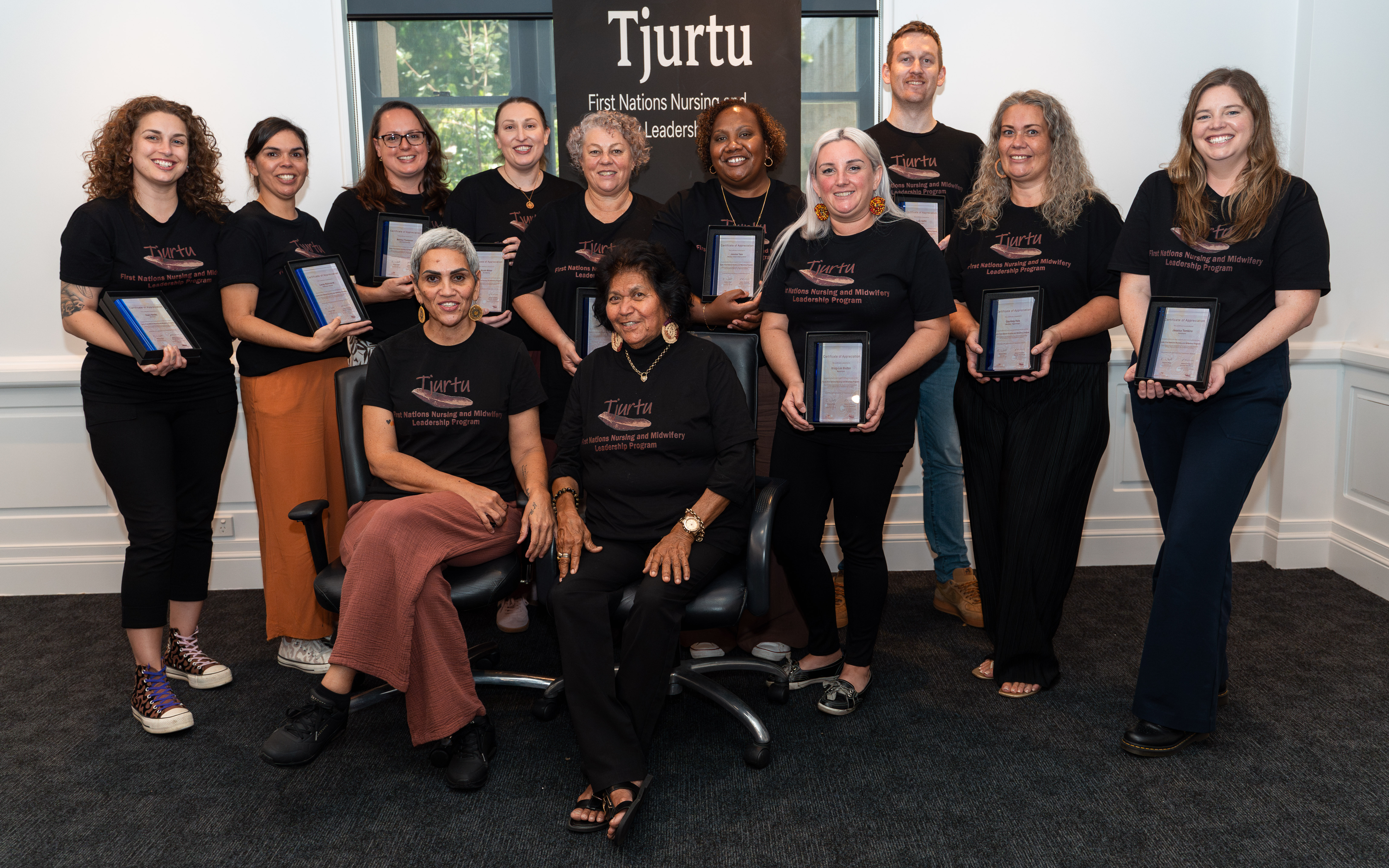
Pictured: Tjurtu Program Graduation 2025
The program focuses on empowering nurses and midwives to lead with cultural strength and knowledge. What does this look like in practice?
In practice, Tjurtu creates spaces where First Nations nurses and midwives can lead as their whole selves — culturally, spiritually and professionally. Through Yarning Circles, storytelling, cultural reflection and the Five Cultural Anchors, participants strengthen leadership confidence, emotional sovereignty, kinship accountability and systems advocacy.
Participants consistently described feeling more confident to speak up, advocate for mob and challenge culturally unsafe systems. Leadership is understood not simply through hierarchy, but as relational, community-centred and grounded in culture and accountability.
The program has already produced practical workforce outcomes including strengthened postgraduate pathways, leadership progression and governance capability.
What can health organisations do to better support First Nations cultural leadership?
Health services need to move beyond symbolic commitments and invest in genuine structural support for First Nations leadership. This includes embedding First Nations governance, investing in culturally safe leadership pathways and recognising cultural leadership as core workforce capability.
One of the strongest recommendations from the Tjurtu pilot is the need to formally embed First Nations Nursing and Midwifery Leadership Programs within the Nursing and Midwifery Enterprise Bargaining Agreement as a role-essential workforce capability program for Aboriginal and Torres Strait Islander nurses and midwives and that participation in First Nations Nursing and Midwifery Leadership Programs be recognised as legitimate work time rather than optional CPD or discretionary professional development leave.
Organisations must also support First Nations-only learning spaces, culturally safe mentoring and sovereign governance structures while addressing barriers such as inflexible HR systems and inconsistent managerial support. Ultimately, culturally grounded leadership must be recognised as essential workforce infrastructure, not an optional extra.
What is the long-term vision for the program and what impact do you hope that it will have?
The long-term vision for the First Nations Nursing and Midwifery Leadership Program is to build a strong, connected and culturally empowered First Nations nursing and midwifery leadership workforce across Queensland. The goal is to see First Nations nurses and midwives leading at every level of the health system and nursing and midwifery system including Executive Directors of Nursing and Midwifery ang Chief Nursing Officer and Chief Midwifery Officers — from clinical care to executive leadership, governance, education and policy reform.
Importantly, Tjurtu also provides a blueprint for the future of nursing and midwifery education. The pilot demonstrated that culturally sovereign, First Nations-led learning environments produce measurable improvements in leadership capability, cultural identity, retention and workforce sustainability.
The success factors from Tjurtu should inform future reviews of the ANMAC accreditation standards, particularly around First Nations-only learning spaces, First Nations governance, mentoring, leadership development and workforce sustainability.
Ultimately, Tjurtu is not simply a leadership program it is a restoration of cultural authority in nursing and midwifery and health systems and a blueprint for First Nations-led workforce transformation.
Thank you Professor Roianne West for sharing your insights. To learn more about the program, visit the Queensland Health website.