.png?width=800&auto=format)
Putting People First: Family Planning Tasmania's Commitment to Safe, Inclusive Care
Supporting people at every stage of life, Family Planning Tasmania is helping to improve access to essential sexual and reproductive healthcare.
In this Member Spotlight, we learn how Family Planning Tasmania is creating safe, respectful and inclusive healthcare experiences while supporting the diverse sexual and reproductive health needs of communities across Tasmania.
Can you tell us about Family Planning Tasmania and the role you play in supporting sexual and reproductive health across Tasmania?
Family Planning Tasmania plays an important role in supporting the sexual and reproductive health of people across Tasmania. We deliver a broad range of sexual and reproductive health services through three clinics statewide, complemented by outreach services that help us reach vulnerable communities and people who may experience barriers to accessing healthcare.
Our services cover a wide range of needs, including persistent pelvic pain, menopause and perimenopause care, STI screening and treatment, cervical screening, breast checks, contraception and many other sexual and reproductive health services. We provide care across the lifespan, with our patients ranging from as young as 11 years old through to 99.
A key part of our role is ensuring that people can access respectful, inclusive and appropriate sexual and reproductive healthcare, regardless of where they live or the barriers they may face. Through our clinic and outreach services, we are able to connect with communities across Tasmania and provide care where and when it is needed.
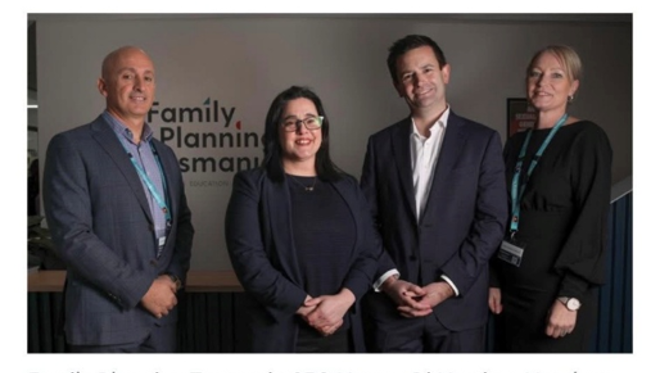
Pictured: Family Planning CEO Marcus Di Martino, Member for Clark Ella Haddad, Labor Leader Dean Winter and Services Manager Karen Brooks on the announcement of a new policy for a fresh start for Tasmania.
What does person-centred care look like in the context of sexual and reproductive healthcare, and how do you ensure consumers feel safe, respected and supported?
Person-centred care is at the heart of everything we do at Family Planning Tasmania. In sexual and reproductive healthcare, we recognise that every person has different experiences, needs, circumstances and preferences, and we take the time to listen to each consumer and understand what is important to them.
For us, person-centred care means creating a safe, respectful and non-judgemental environment where people feel comfortable discussing what can sometimes be very personal or sensitive issues. We ensure consumers are involved in decisions about their care and understand their options, so they can make informed choices that are right for them.
We also recognise that people may have experienced trauma, discrimination or barriers to accessing healthcare. Our approach is therefore focused on building trust, respecting individual choice and maintaining dignity and privacy at every stage of the consumer journey.
We aim to ensure every person who accesses our services feels heard, valued and supported, regardless of their age, background or circumstances. This is particularly important in sexual and reproductive healthcare, where creating a safe space can make a significant difference to a person's willingness and ability to access the care they need.
.png "IA-Courses-Social-Media-(19).png")
Pictured: Left - Clinical Services Manager Karen Brooks with Australian Prime Minister Anthony Albanese, Right - Dr Victoria Whelan, Lead Nurse Johanna McShane, Regional Medical Officer (South) Dr Catherine Moult, Dr Jess Radvan and Dr Katelyn Brooks
What have you found to be most important in building a strong culture of quality and safety across your organisation?
For us, building a strong culture of quality and safety starts with creating an environment where everyone understands that quality care is the responsibility of the whole organisation. It is about making sure our staff feel supported to speak up, ask questions, identify risks and share ideas for improvement without fear of blame.
Communication and teamwork are particularly important. We encourage our teams to share information, learn from incidents and feedback, and continually look at how we can improve the way we deliver care. We also value the contribution of our consumers and recognise that their experiences and feedback are an important part of understanding what we do well and where we can improve.
Strong clinical governance, clear processes and ongoing staff education also underpin our approach to quality and safety. However, we believe these systems are most effective when they are supported by a culture of openness, accountability and continuous improvement.
Ultimately, we want quality and safety to be embedded in the way we work every day, rather than something that is only considered in preparation for accreditation. Our goal is to ensure that every person who accesses Family Planning Tasmania receives safe, high-quality and respectful care, and that our staff have the knowledge, resources and support they need to deliver it.
Was there anything you learnt from your last assessment with ACHS?
Our experience with ACHS was extremely positive, and the process provided us with valuable reassurance and opportunities for reflection. The ACHS team were incredibly supportive throughout the assessment, and we found their customer service to be exceptional.
One of the things we particularly appreciated was knowing that support and guidance were only a phone call away whenever we had a question or needed clarification. This made the accreditation process feel collaborative rather than daunting and helped make the whole experience smooth and manageable for our organisation.
The assessment also reinforced the value of regularly reflecting on our systems and processes and looking for opportunities to continually improve. Overall, our experience with ACHS was excellent, and we felt very well supported throughout the entire journey.
Do you have any advice for other ACHS Members on their accreditation journey?
Our advice to other ACHS Members would be to embrace the accreditation process rather than see it as something to be worried about. It is a valuable opportunity to step back, reflect on your organisation and look at what you are doing well, as well as where there may be opportunities to improve.
We would also encourage organisations to involve their staff throughout the process. Accreditation is much more meaningful when quality and safety are understood as everyone’s responsibility, rather than something that sits with one person or one team.
Most importantly, don’t be afraid to ask for help. Our experience with ACHS was extremely positive, and we found the team to be supportive, approachable and responsive. Knowing that we could pick up the phone and get guidance when we needed it made the process much smoother and gave us confidence along the way.
Our biggest piece of advice would be to see accreditation as a journey of continuous improvement, rather than simply something you need to achieve. If you approach it with an open mind and a willingness to learn, it can be a really positive experience for the whole organisation.
Thank you to the team at Family Planning for sharing your insights.