QI In Action: Telehealth Increased Access to Treatment in Rural Areas
We spotlight QI Awards 2025 Winner of the Clinical Excellence and Patient Safety Category.
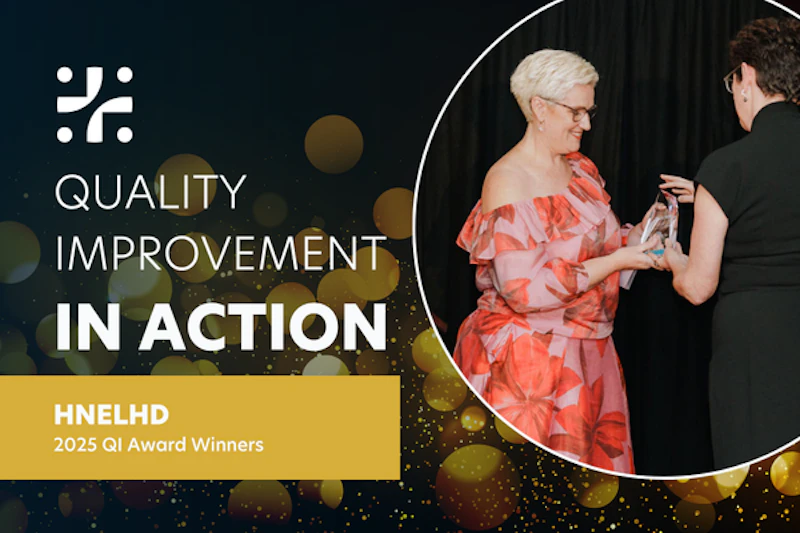
We are proud to spotlight the winner of the Clinical Excellence and Patient Safety category in the 2025 ACHS Quality Improvement Awards, Centre for Psychotherapy, Hunter New England Local Health District (HNELHD), NSW.
Their project titled, ‘TIATRA: Telehealth Increased Access to Treatment in Rural Areas for people with Border Personality Disorder,’ aimed to increase access to evidence-based Dialectical Behaviour Therapy for people with borderline personality disorder living in rural areas. The project was delivered through a partnership between Hunter New England and Murrumbidgee Local Health Districts.
Addressing a critical gap in rural mental health care
People living with borderline personality disorder (BPD) in rural and remote areas face significant barriers to accessing evidence-based care. Dialectical Behaviour Therapy (DBT), while recognised as best practice, is considered resource intensive and traditionally delivered in metropolitan settings. The Telehealth Increased Access to Treatment in Rural Areas (TIATRA) project was developed to address this inequity. TIATRA trialled a hybrid model combining telehealth delivered DBT skills groups with locally delivered individual therapy by rural clinicians. The project demonstrates how quality improvement principles can drive meaningful change in access, outcomes, and sustainability.
Strong, values-based leadership underpinned the project’s success. Leaders prioritised collaboration, respect, and empowerment through leveraging technology, cross district partnerships, and local capability. Working across two LHDs enabled shared learning, efficient use of resources, and testing of the model in different rural contexts.
A defining strength of TIATRA was the genuine partnership with people who have lived experience. Lived experience representatives were involved in the project team, shaping service design, delivery, and evaluation. Their involvement ensured the program remained grounded in consumer priorities and fostered a culture of openness, respect, and psychological safety.
Delivering measurable impact
The TIATRA project delivered strong outcomes at consumer, clinician, and system levels. Consumers experienced clinically significant improvements across key measures, including reductions in suicide attempts and self-harm, BPD symptom severity, depression, disability scores and alcohol/substance use.
Clinicians reported marked increases in confidence and capability to deliver DBT, and both clinicians and consumers rated the model as highly acceptable and feasible. At a system level, the program was associated with reduced psychiatric inpatient admissions and emergency department presentations, with economic analysis indicating the model is financially sustainable and offers value for rural health services.
Designed for sustainability and scale
TIATRA is innovative in both practice and process. The hybrid telehealth model maintained consistency to DBT while adapting delivery to rural realities, and pooling multiple rural sites enabled viable group delivery and stronger clinical networks. Designed with scalability in mind, the model offers a flexible framework that can be adapted to other rural and remote settings and extended to other areas of mental health care where access to specialist treatment is limited.
The project demonstrates how effective leadership, lived experience partnership, and continuous improvement can drive practical, sustainable solutions, improving access to best practice care, strengthening rural workforces, and delivering meaningful outcomes for communities.
Read the full project on pg. 7 of the Quality Initiatives: the 28th ACHS Quality Improvement Awards. Watch the team accept the QI award at the ACHS Annual Awards Ceremony 2026 here.
Apply for the QI Awards 2026!
Got an inspiring project you want to share? Applications for the QI Awards 2026 are now open. Learn more or apply here.
Submissions close on Friday 4th September 2026, 5pm AEST (+10:00 GMT)